

We all know about Debian, Fedora and Arch but what about the lesser known ones that are built from the ground up?
You must log in or register to comment.
puppy linux! an entire live graphical desktop system with browser and office suite compressed to fit in 300MB, so you can run it from RAM and use the USB for storage.
Puppy linux is wonderful as part of an IT “USB toolkit” for when it might not be safe to boot the normal OS, if you need to try data recovery on a dying HDD, or just need quick access to linux based tools.
And it’s surprisingly full featured for the small size. I’ve lived out of it for a week or so when a HDD died and I was waiting for a new one to ship.
puppy isn’t independent, its based on other distros like ubuntu/debian or void
yeah but it’s a different one every release, whatever makes the smallest image.
I’m going to say Alpine/postmarketos. The reason I say both is pmos uses Alpine as a base, but a lot of the code is built from the ground up as its a linux distro designed to run on mostly ARM devices (old phones and tablets. Even some old iOS devices!)
It makes sense it would run on some old iOS devices. Iirc, they run heavily heavily customized alpine linux under the hood.
I remember jailbreaking my first-gen touch, and one of the first steps after you get root is to change the default creds from user: alpine pass: alpine, because there was a joke “malware” going around that relied on the default creds.
I believe the drivers for pmos are all written from scratch, at least for the iOS devices. I’m sure some things could be borrowed from Lineage device trees. Their Wiki says that most of their supported iOS devices dont have anything past basic screen support, so I would guess that the shared base is only marginally helpful, unless alpine is no longer a part of iPhones (iPhone 6 is the oldest on the supported list I think?)
I’ve got a really obscure one.
Anyone here heard about FLI4L? Floppy ISDN for Linux? Built from the ground up to be usable on your really old PC as a router. Originally it fit on a single floppy disc and was able to turn a 386 into a modem or ISDN router. Later they added the ability to route between LANs and DSL.
By now the requirements have been raised to super beefy 586 PCs. It probably doesn’t fit on a floppy disc anymore.
https://en.wikipedia.org/wiki/Bootable_business_card and LNX-BBC or the more recent damn small Linux
My first contact with Linux i still love it…
This reminds me of Coyote Linux, a firewall distribution that I also used to run on a 386 from a floppy disk!
In addition to alpine id also throw nixos in.
It’s a real niche OS with a very different approach to setup and configuration than any other I’ve seen and tested. It’s now my server Linux and after more than a year I’m still not sure if I would recommend it 😂
I’ve been using NixOS for my laptop and servers for over a year and I’m totally obsessed with it. While I upvoted you for visibility, I wouldn’t really call NixOS obscure anymore. I’m constantly seeing it randomly mentioned in various distro-agnostic Linux spaces online lately.
Although it’s been seeing a lot of hype lately, I agree it’s still sort of niche and definitely not for everyone.
I can see where you’re coming from! Specifically this community though I’ve not seen it a lot - you’re completely right though, the more native one becomes the more one is confronted with it.
I’m still struggling with the slowness of things (e.g. a quick endpoint change) and I can’t get my head around reason error messages “fluently”, i.e. I have to think about what the errors want to tell me instead of resolving it - a bit like old python stuff really.
And then there are the edge cases … It took me a long time to change the config the very first time while offline - which makes sense from a model perspective but from my user brain it was just … wrong :D
Perhaps I should switch my clients as well to get more exposure…
NixOS has a lot of visibility, probably because the basic concept is so appealing to people who like to tinker with their OS. But its user base is still tiny.
Aren’t both Alpine and NixOS really big in certain enterprise areas? And NixOS and Alpine are both relatively well covered in news articles and posts.
When I think niche Linux distro, something more like GoboLinux comes to mind:
GoboLinux at a Glance - GoboLinux is a modular Linux distribution: it organizes the programs in your system in a new, logical way. Instead of having parts of a program thrown at /usr/bin, other parts at /etc and yet more parts thrown at /usr/share/something/or/another, each program gets its own directory tree, keeping them all neatly separated and allowing you to see everything that’s installed in the system and which files belong to which programs in a simple and obvious way.
I tried more “niche from a popular perspective”. You’re right, especially alpine is in the background of a lot of docker containers but rarely an end user who just want their desktop environment knows them.
For nixos I’ve not yet seen anyone in the enterprise world pushing for it - there it’s still all about containerization and orchestration in cloud environments, using that as reproducibility layer. That might change though with data sovereignty discussions going on.
I’m still not sure if I would recommend it 😂
sounds like a NixOS user to me! I’ve been using NixOS as my daily driver for the past several months and I’m not sure if I would recommend it. It makes the hard things easy and the easy things hard. I love the fact that I can very easily pass kernel params or gpu settings via my flake. that’s nice. that’s easy. I don’t like finding some random FOSS project I want to try out and then trying to determine what dependencies I need, if I have them all in my nix-shell, etc.
But honestly once you figure it out and set up distrobox on it you’ll never need to distrohop again because you’ll have everything on one OS.
Alpine is not really obscure, it’s THE clustering distro… Even Microsoft delivers alpine docker images for their dotnet stuff
Love nixOS (my daily driver) but I wouldn’t call it obscure. It seems to be becoming as popular as Arch for people interested in experimental distros.
Chimera!! https://chimera-linux.org/
Fun to see Chimera mentioned. The company I work for is actively helping development of it.
Igalia?
Nah. A company looking to run FreeBSD user space software on Linux.
Oh interesting!
Wow, a Japanese version of Knoppix, which I think is German and sadly dead. I think you won the obscurity prize.
Knoppix might be dead? That sucks. It was my first exposure to Linux. A family member who never participated in holiday gift-giving and almost never visited suddenly visited one day when I was young. I don’t remember much of the visit, but he left me with a Linux or Knoppix “for dummies” book with a Knoppix live bootable CD in it, and a burned disc of a more up to date version. He knew I was into tech, and this was pre-Steam days. Internet then was not what it is now, so it was a seriously nice gift for a growing nerdling.
He’s slightly more present now that I’m an adult, and he swears he has no memory of this. Or of Knoppix. But he daily drove Ubuntu as of a few years ago, and he’s the only family member even remotely techy and old enough for it to have been.
Maybe I was blessed by Tux himself?
Might have also been one of my Dad’s coworkers, as he got one of them to backlight mod my GBA back before the SP came out. But it would be very weird if I confused an actual visit. Maybe there was no visit and my dad just handed me the stuff and told me who it was from?
It’s a bit of a mystery, with significant impact to my life trajectory.
No release in several years, forums have a bunch of spam posts in there, etc. Seems to be mostly untouched at this point, so probably dead yeah.
@wizardbeard @massive_bereavement
Well, Knoppix is not *dead* as it is free software, and anyone is free to pick it up and continue it. The code is alive and kicking, so to say.
It’s just that the maintainer has had no more spare time due to other occupational obligations.
I meant in distrowatch appears as so. Then again I really like these kind of hobbyist opinionated distros that sprouted in the early 2000s and the zeitgeist behind.
It also came with a book on how to use Linux, and part of it was a manga. I think you can still find it here and there.
GNU Guix System is independent I think. Interesting distro, but not for the faint of heart.
why? what does it do to faint hearts?
Makes them read Scheme.
But seriously, it’s a scheme-based approach to a fully free declarative OS, similar to NixOS (from which it was forked ages ago. They are doing very interesting work and some HPC and scientific folks are taking notice.
NixOS is fun once it clicks for you. It’s nice having a system you can run your way, configured your way, and there’s really no wrong way. I mean hell you can have your configuration in javascript if you REALLY wanted to. you can have everything in a single configuration file if you prefer that or you can have things in individual modules and managed via a flake.nix. You can have all your various configurations for your DEs/WMs/etc in the .config dir or you can put them all in a single file or you can have NixOS manage the individual configs for you for easy backup.
I like that it’s extremely easy to reproduce the system and back it up. my system is backed up to a private git repo and if I need to rebuild my system on another PC it’s just a matter of installing NixOS and then cloning my system repo and then I’m on the exact same setup as another machine. Also because of this and with nix-shells it makes dev work a breeze. same exact setup every time so the old argument of “well it works on my machine” doesn’t apply.
All that being said I’m not sure if I’d recommend it to others. It makes the hard things easy and the easy things hard. But it’s one of those distros where you’ll switch from it for like a week or two and then miss it and want to go back. but keep in mind those weekly/bi-weekly switches are common. sometimes you’ll just feel like you’re spending way too much time configuring your nixos system so you’ll switch to like Fedora or something so you don’t have to think about it. Or you get frustrated trying to get something to work on NixOS so you’ll switch to Arch where everything just works. but then you’ll get bored of those distros and go back to NixOS.
It’s a never ending cycle. Thankfully NixOS takes all of 10-15min to reinstall and back to the previous setup.
I’m running Gallium OS on an old Chromebook … it’s a dead distro at this point, and getting a bit frightfully outdated, but it’s the only distro specifically made for that hardware.
You should be able to run any Linux
Yeah, but Gallium has optimizations and drivers for Chromebook-specific hardware, including a custom kernel.
With any other distro, performance and battery life won’t be quite as good, and some of the Chromebook specific stuff like special keyboard keys and the touchpad might not work.
Isn’t that stuff mainlined?
Not that I’m aware of.
Bedrock Linux is a meta Linux distribution which mixes-and-matches components from other distributions and integrates them into one largely cohesive system.
…
Traditional Linux distributions distribute software which includes the Linux kernel. This is done with the aim of providing users a Linux based operating system.
Meta Linux distributions share the eventual goal of a Linux based operating system, but do so in a means other than distributing the end-goal software itself.
Other meta Linux distributions include:
- Linux From Scratch which provides a set of instructions to build a Linux system.
- Gentoo Linux which provides a flexible system which can compile the user’s desired Linux system. Gentoo describes itself as a metadistribution.
Bedrock provides a means to compose a target of the user’s desired system from a potentially eclectic mix of parts of other distros.
Solus is build from scratch.
How is Solus these days? It was my daily driver a few years ago and I loved how simple and performant it was, but I moved away from it after the second time project leadership crashed out and had to be replaced.
Very performant and reliable. They stick to a weekly sync on Fridays where regular updates are pushed out, fixes for CVE:s can be pushed out inbetween.
The org is quite a bit larger these days with several core people sharing responsibilities.
I always liked Budgie, but never ran Solus.
Buildroot, Alpine and OpenWRT
Just a word of warning: be careful of some of the more obscure distros as they tend to get behind on security updates
Alpine is less obscure now because of containers, but I haven’t considered running it as a desktop OS.
I wouldn’t personally use it on the desktop. If it ran systemd I’d consider it for servers.
Openwrt is fairly secure, no? Otherwise people wouldn’t use it in their network stack?
Generally it is pretty solid. By obscure I mean distros like Tinycore that don’t have security as a focus
Slackware, Gentoo, the Mandriva family (OpenMandriva, Mageia, PCLinuxOS, ROSA, ALT Linux), Void, Alpine, Chimera, Venom, CRUX, Exherbo, Paldo, the PiSi family (PiSi Linux, old versions of Pardus), and Solus (eopkg is a fork of PiSi).
the Mandriva family (OpenMandriva, Mageia, PCLinuxOS, ROSA, ALT Linux)
Originally based on Red Hat Linux and the forks are obviously not built from the ground up either.
In fact, any fork of anything is just outright against the premise of OP.
slackware, gentoo, crux maybe
there are stuff like tinycore too
I think arch is based on crux?
Or smth Idkit was inpired and afaik at first based on it, but arch has threaded its own path ever since
I see
I believe it is technically based on Fedora, but it’s not really clear to what extent (i.e. is it a fork from 20 years ago or do they keep it in sync?), but Red Star OS is a distro for which an exception can be made.
Red Star OS 1.0
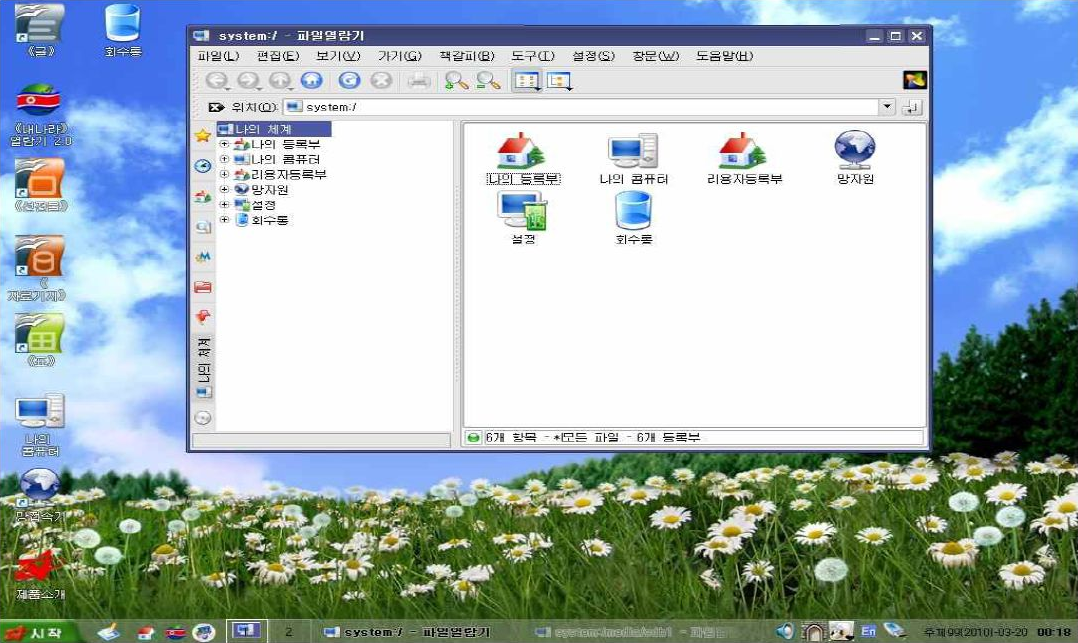
Red Star OS 2.0:
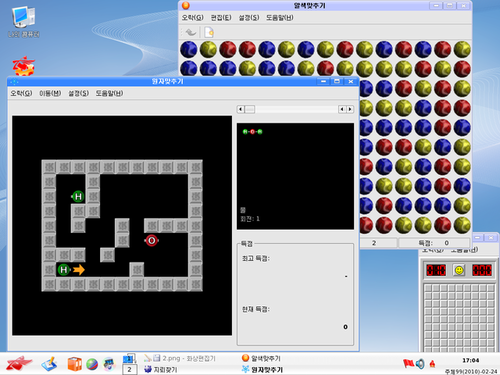
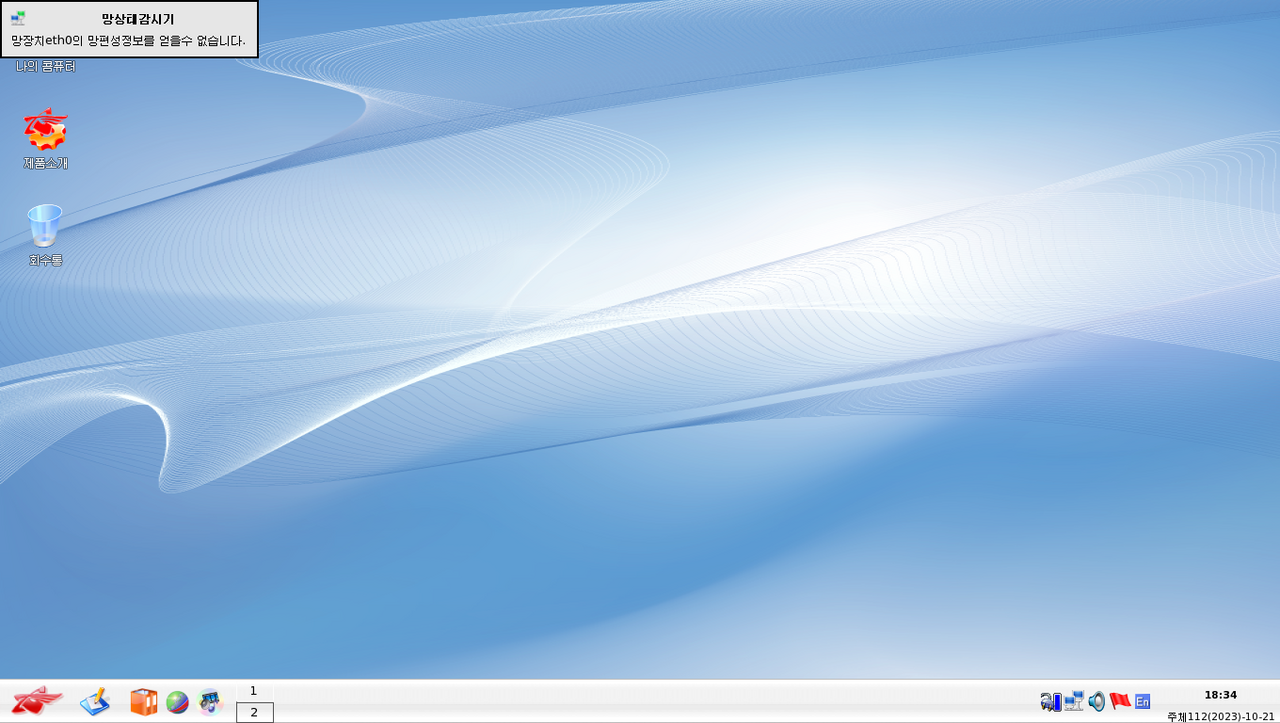
Red Star OS 3.0:
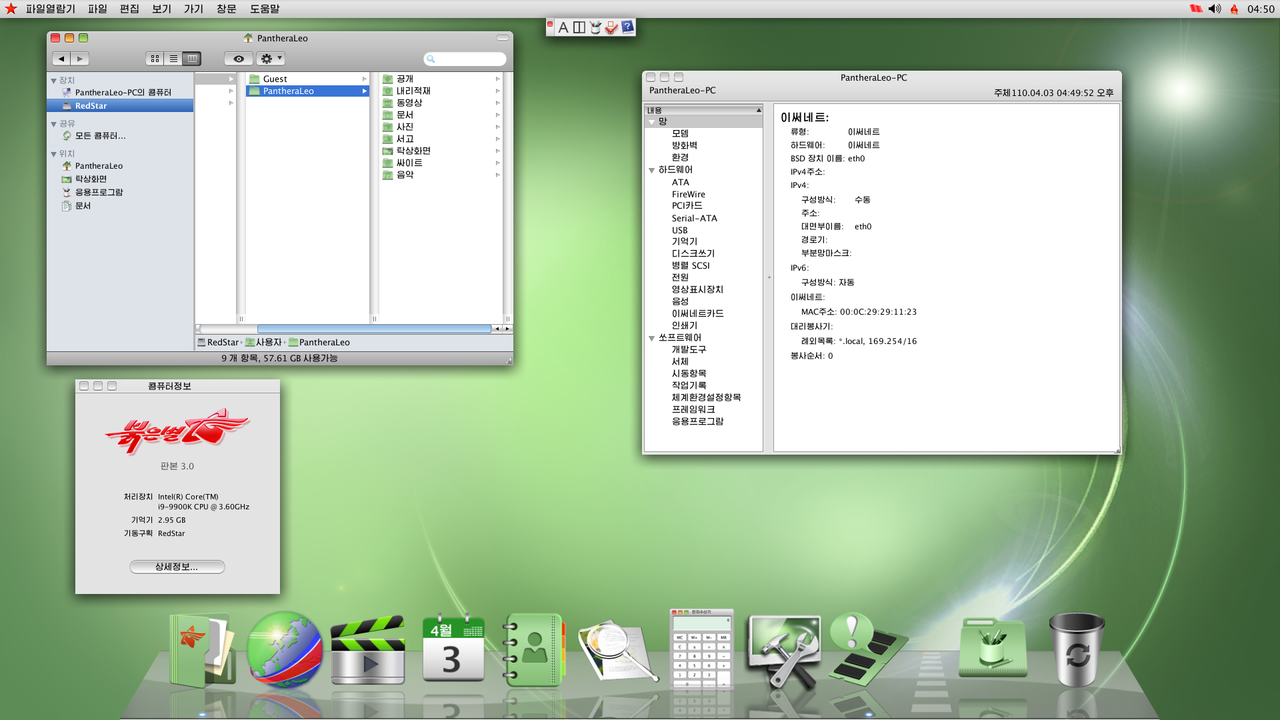
Red Star OS 4.0:
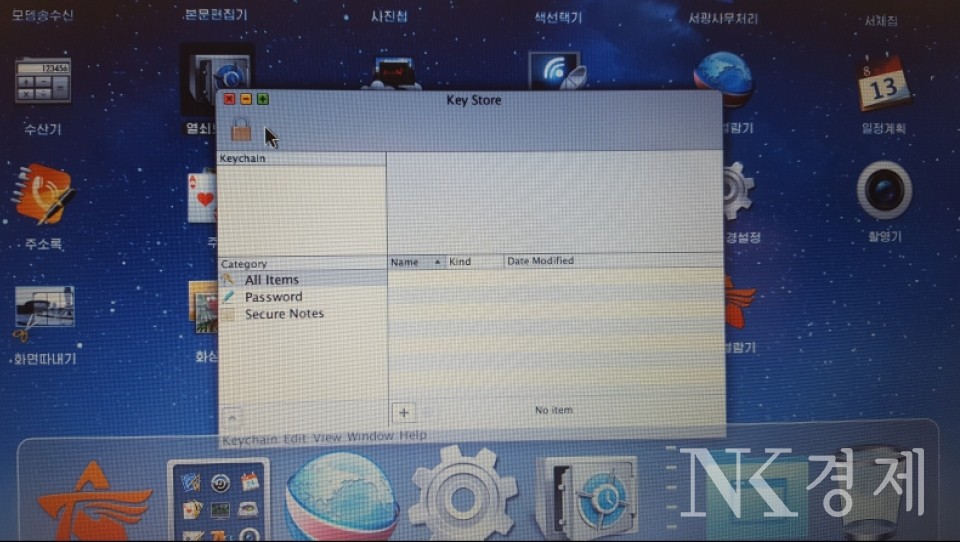
Beyond the rather interesting design/visual choices, it has some rather unique features and functionality.
Wow new macos version looks bad SMH.
/S