

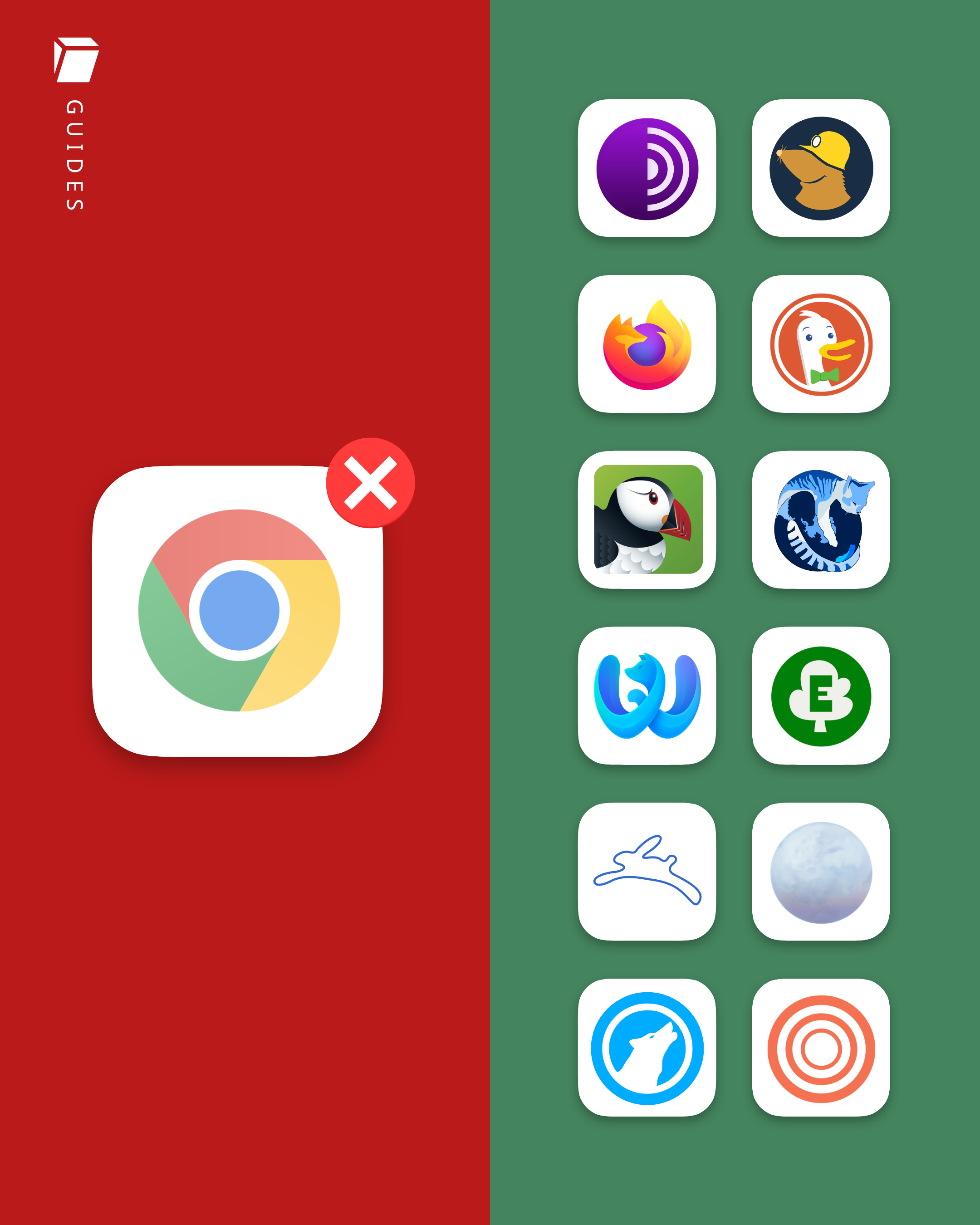
Take a look at these alternative browsers to Google Chrome & let us know which is your favorite! 🌐 🔐
If you’re looking for a new browser find out more 👉 https://tuta.com/blog/best-private-browsers
@firefox @duckduckgo @puffin @Waterfox @ecosia @palemoon @zenbrowser @mullvadnet @torproject @Waterfox @Freenet @librewolf
deleted by creator
They’re not “run on Chromium” like apps run on Windows. They use Chromium as their integral part. Better analogy would be taking Windows, uninstalling some but not all pre-installed apps, adding a bunch of bells and whistles to it, and saying that you’ve made an OS that is an alternative to Windows.
Exactly. Calling Chromium-based browsers “Chrome with extra steps” might not be exactly accurate, but it conveys the truth of the matter pretty accurately
deleted by creator
You linked a marketing page. It says “it’s a layer”, sure. They conveniently omitted that other “layers” they mention - UI and synchronization between devices - aren’t even close to be comparable in complexity with engine.
Like that one guy in your school project, slacking off for a month, and then coming in hot with writing a page out of 30, and getting equal share of the credit.
deleted by creator
Have you… read it?
deleted by creator
The use of the word layer is very clearly intended to imply its one component of many.
Like if you crotchet your own steering wheel cover then is the car just a layer in your amazing unique transportation device?
@fizzle
A software layer itself consists of components.
ahem every linux distribution ahem
Exactly. Nobody in their right mind will say that Ubuntu is a Linus Torvalds free alternative to Linux.
Good analogy, what happens if Microsoft decided tomorrow that windows was no longer a profitable venture and stopped maintaining it?
Relying on Chrome and Firefox for alternatives to Chrome and Firefox is still an issue. Especially with Mozilla, if they folded the community would not have the resources to maintain Firefox.
deleted by creator
When Google will discontinue Chromium as an opensource project (notice that I didn’t say if), all those browsers will survive for half a year and then die due to lack of compliance and security updates. Chromium is incredibly complicated, web protocols are even more complicated, none of that is good, and people are rapidly losing the ability to maintain complicated projects due to LLM-induced mass psychoses.
The fact that the engine can in theory be forked now doesn’t add much.
deleted by creator
For you? Depend on your budget and how many people you employ.
deleted by creator
I’m saying, both basically and extensively, that if you’re using Chromium as your engine, you don’t get to then turn around and tell that your product is a solution to a corporate world and you’re the alternative of evil Google, or whatever the basic spiel of all this endless ad posts here.
Building an engine is complicated, forking and continuing Google product is more complicated, I get it. Chromium-based products can be good, and I bet most of them are better than Chrome (but then again, hitting your pinky toe at night when you go to pee is also better than Chrome, so low bar). But “the alternative to Google tyranny” they aren’t. You need to at least fork the engine, support it independently, and substantially alter it, even to be considered one.
So again. My solution as a browser builder is to ask “how much money I have, and how much people I employ”, and additionally, what’s my actual point of doing it, what am I trying to achieve.
deleted by creator
I kind of assumed you would reply with a lack of understanding of the resources it takes to maintain those engines and keep them complaint with web standards.
deleted by creator
It’s still a problem. I didnt say we had other options right now. But pretending it’s not a problem isn’t going to fix it. Do you really want to rely on those companies for your browser engines? Mozilla is at least an alternative to Google, but a tenuous one. And Microsoft taking over development of either of those isn’t an improvement.
deleted by creator
You forgot
deleted by creator
It’s like you never heard of Google and their practices.
deleted by creator
If that happen, they fail dramatically, because they already demonstrated how good are they at making a browser, so good they threw away everything the second chromium got on their horizon. And since maintaining other people’s convoluted bullshit is more complicated than your own, their chances will be even lower.
Gecko would die the minute mozilla said they weren’t going to maintain it.
No one is going to pick it up.
deleted by creator
Pedantry isn’t really an argument, its just pedandtry. Those engines rely almost entirely on the resources provided by Google and Mozilla’s development of their broswers. Open source is all well and good, but those engines are not primarily maintained by the community, they’re maintained by employees at Google and Mozilla.
The majority are soft forks - compiling chromium with some flags, patches, presents, and add-ons.
@fizzle
Could be, but the ones I know do a little bit more.
https://yngve.vivaldi.net/sooo-you-say-you-want-to-maintain-a-chromium-fork/
Oh yeah, some custom css as well.